
(Why shorter focus sessions often work better than forcing 25 minutes)
Some days, even opening your laptop feels heavy.
You want to work.
You know what needs to be done.
But the moment you start a 25-minute Pomodoro, your brain quietly rebels.
If this sounds familiar, you’re not lazy—and you’re not broken.
You’re just low on mental energy.
That’s where the 15 minute pomodoro becomes surprisingly powerful.
In this post, I’ll break down why 15 minutes works better on low-energy days, how to use it properly (without feeling unproductive), and how I personally use short sessions to stay consistent instead of burning out.
Why 25-Minute Pomodoro Fails on Low-Energy Days
The classic Pomodoro technique assumes one thing:
You already have enough mental fuel to start.
But on low-energy days—after poor sleep, emotional stress, or long weeks—that assumption collapses.
Here’s what usually happens:
- You start a 25-minute timer
- Your brain panics at the length
- You check your phone “for a second”
- Focus breaks in 5–7 minutes
- Guilt kicks in
- You quit the session entirely
The problem isn’t discipline.
The problem is mismatch between energy and session length.
The Psychology Behind the 15 Minute Pomodoro
The 15 minute pomodoro works because it removes mental resistance before you even start.
1. Shorter Time = Lower Entry Barrier
Your brain doesn’t argue with 15 minutes.
It feels safe. Temporary. Manageable.
2. Reduced Cognitive Load
You’re not thinking, “I have to focus for so long.”
You’re thinking, “Just 15 minutes.”
3. Momentum > Motivation
Once you start, momentum often appears naturally—even on bad days.
This is why short sessions are not a downgrade.
They’re a strategy adjustment.
When You Should Use a 15 Minute Pomodoro
Not every day needs 15 minutes.
But some days absolutely do.
Use a 15 minute pomodoro when:
- You slept poorly
- You feel mentally drained
- You’re emotionally overwhelmed
- You’re procrastinating without knowing why
- You keep restarting timers and failing
- You feel resistance before even starting
Think of it as a low-energy mode, not a weak mode.
15-Minute vs 25-Minute Pomodoro (Quick Comparison)
| Factor | 15 Minute Pomodoro | 25 Minute Pomodoro |
|---|---|---|
| Best for | Low-energy days | High-energy days |
| Start resistance | Very low | Medium to high |
| Focus depth | Light to medium | Medium to deep |
| Failure risk | Low | Higher when tired |
| Consistency | High | Depends on energy |
| Mental pressure | Minimal | Moderate |
Key insight:
Consistency beats intensity when energy is low.
How to Use the 15 Minute Pomodoro (Step-by-Step)
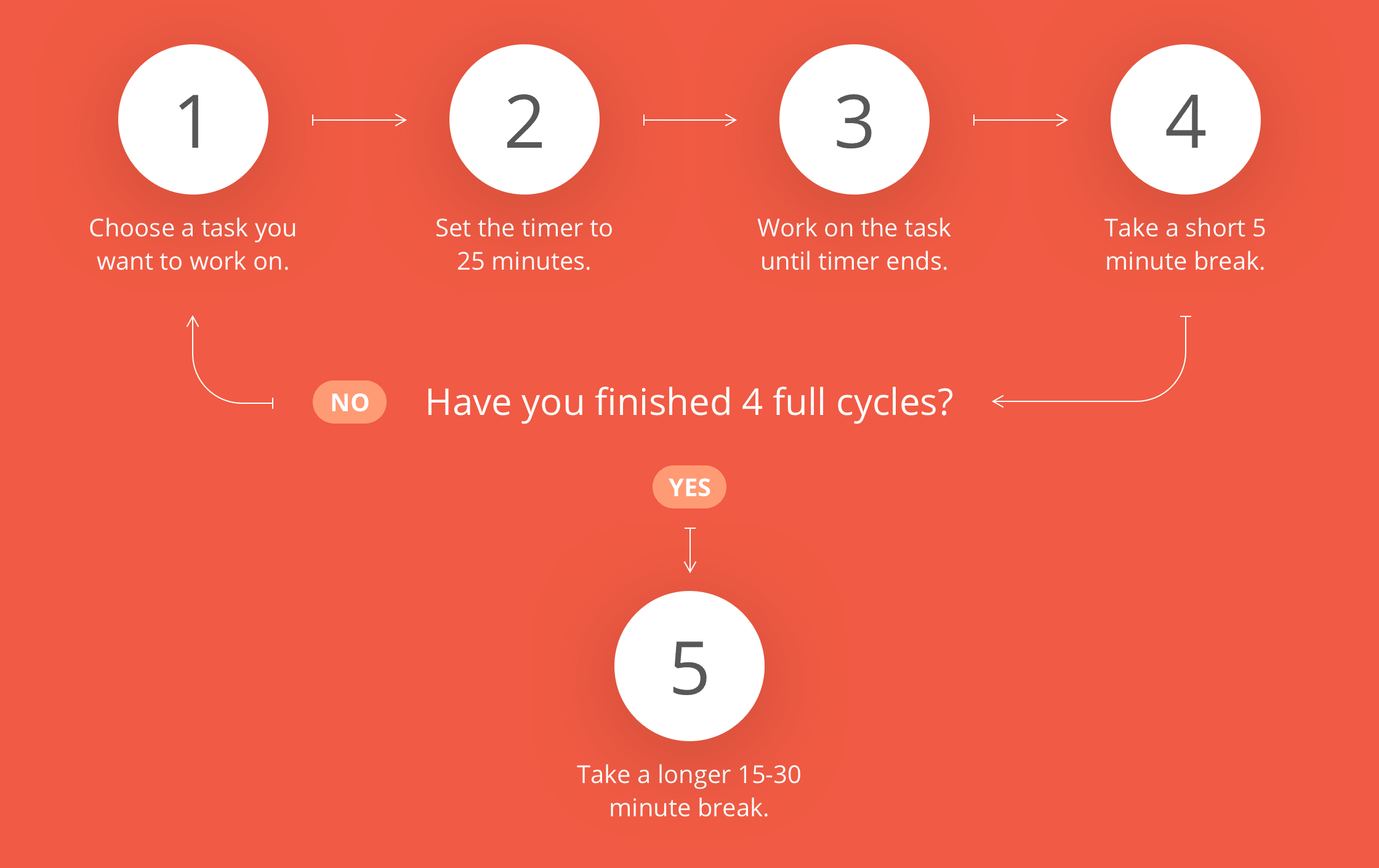
Step 1: Choose a Small Task
Not “Study Physics.”
Choose something like:
- Revise 5 formulas
- Read 2 pages
- Write one paragraph
- Organize notes
Step 2: Set a 15-Minute Timer
No extensions.
No pressure to “continue if you feel good.”
Just 15.
Step 3: One Task Only
No multitasking.
No switching tabs.
Step 4: Stop When the Timer Ends
This is important.
Stopping builds trust with your brain.
It learns that starting doesn’t trap you.
Step 5: Take a Real Break (5–7 min)
Stand up.
Move.
Hydrate.
Then decide—honestly—whether to do another session.
The Hidden Benefit: You Stop Hating Work
This part surprised me personally.
When I forced 25-minute sessions on low-energy days, work started to feel punishing.
When I switched to 15 minute pomodoro sessions, something changed:
- Less guilt
- Less internal fighting
- More completed sessions (even if shorter)
- More days where I showed up
Productivity isn’t about pushing harder.
It’s about reducing friction.
But Is 15 Minutes Enough to Be Productive?
Short answer: Yes—if you measure the right thing.
Most people measure productivity by:
- Hours worked
- Timer length
- How tired they feel
Better metrics:
- Did you start?
- Did you finish something?
- Did you avoid burnout?
- Did you stay consistent?
On low-energy days, showing up beats scaling up.
Five 15-minute sessions across a day = 75 minutes of focused work.
That’s often more than a single failed 25-minute attempt.
Common Mistakes With 15 Minute Pomodoro
❌ Using It Only Once
If energy is low, plan multiple short sessions, not just one.
❌ Feeling Guilty About Short Sessions
Short sessions are intentional—not lazy.
❌ Switching Tasks Every Session
Stick to one theme (same subject, same project).
❌ Ignoring Patterns
If you always need 15 minutes, your energy schedule might be off.
Track What Actually Works (This Changed Everything for Me)
One big mistake I made early on was guessing.
I felt unproductive—but I didn’t have proof.
When I started tracking:
- Session length
- Completion rate
- Energy level
I noticed something clearly:
On low-energy days, my 15 minute pomodoro success rate was much higher than 25 minutes.
That’s why I built rbpomodoro.com—to track focus patterns instead of forcing a fixed rule.
Instead of asking:
“Why can’t I focus for 25 minutes?”
I started asking:
“What session length works today?”
That shift alone reduced burnout massively.
Sample 15-Minute Pomodoro Schedule (Low-Energy Day)
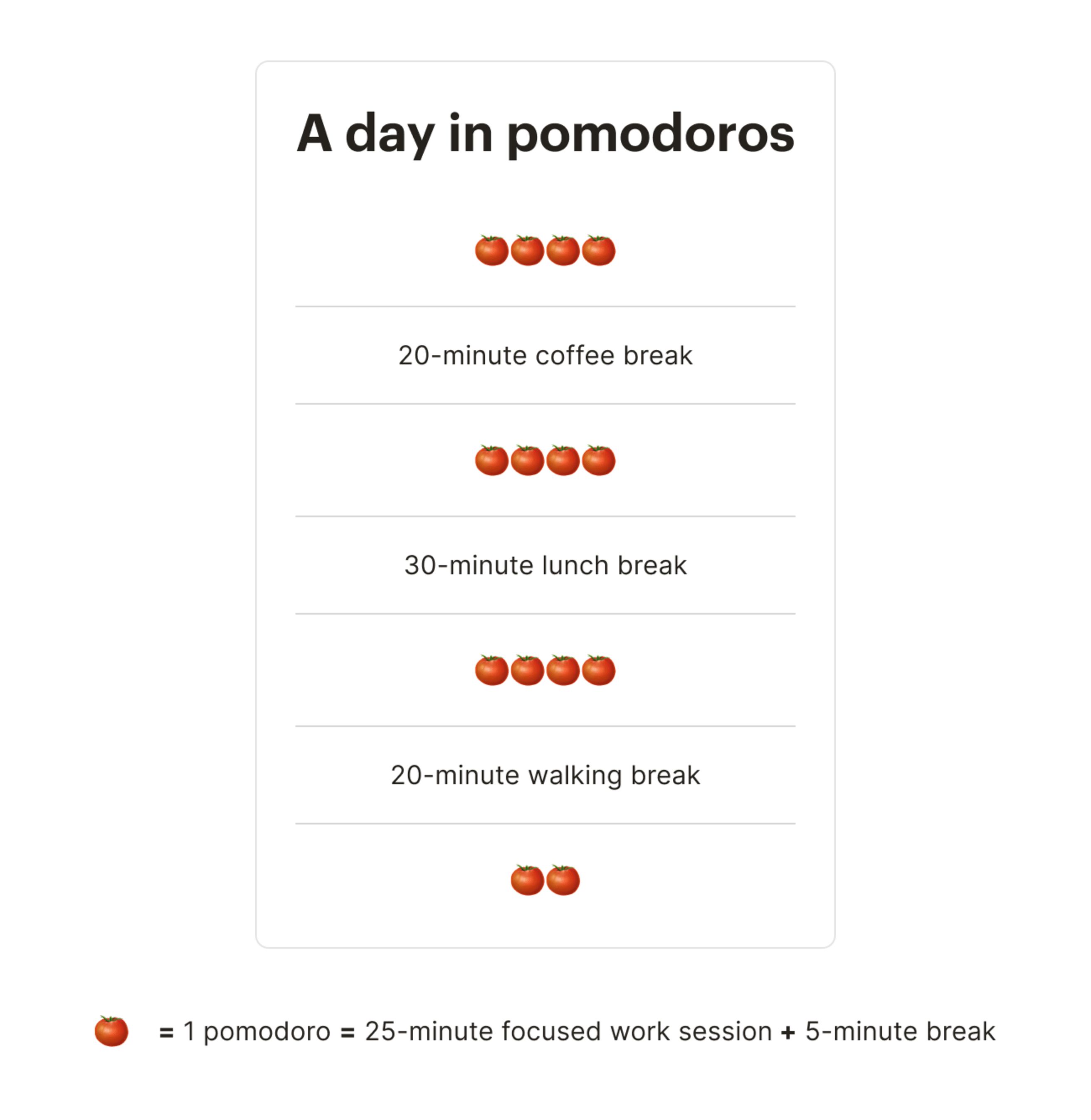
Morning
- 15 min: Light review
- 7 min break
- 15 min: Easy task
Afternoon
- 15 min: Core task
- 10 min break
- 15 min: Continue or stop
Evening
- Optional 1 session if energy allows
No pressure.
No “I failed today” mindset.
When to Switch Back to 25 Minutes
The goal isn’t to stay at 15 forever.
Switch back when:
- Starting feels easy again
- You finish 15 minutes and want to continue
- Energy stays stable across sessions
The best system is flexible, not rigid.
Final Thoughts: Productivity Isn’t Fixed—Energy Is Variable
The 15 minute pomodoro isn’t a shortcut.
It’s an adaptive tool for real human days—the tired ones, the messy ones, the emotionally heavy ones.
If you:
- Stop forcing the same session length every day
- Match your timer to your energy
- Track what actually works
You’ll build consistency without burnout.
Your Turn
Next time you feel low-energy, don’t quit for the day.
👉 Try one 15 minute pomodoro.
👉 Track whether you finish it.
👉 Notice how your resistance changes.
If you want to understand your focus patterns instead of guessing, explore rbpomodoro.com—built for flexible session lengths, not rigid rules.
Consistency starts with starting.
And sometimes, starting only needs 15 minutes.